Independent sourcing partner for Cables & Wiring · factory quotations compared on the same panel, port map, and destination
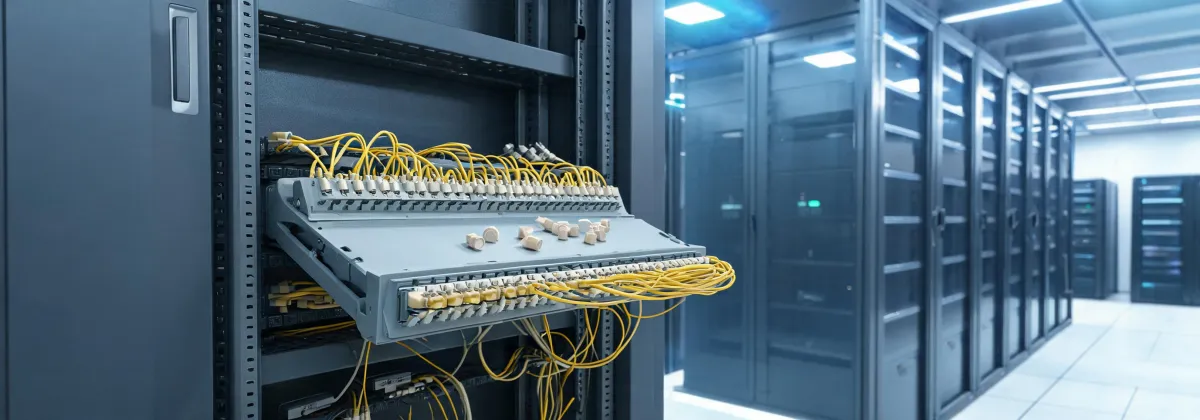
Fiber tray in a data-hall cabinet prepared for a 24-port panel brief

PROJECT USE

fiber patch panel 24 port price

A fiber patch panel 24 port price depends on the plant it will sit in. Write the application, the fiber already pulled, and the connector the active gear expects. LinkScope Sourcing 25 then asks factories to price that line. The desk does not redesign the link.

Turn the application into purchase lines

Data hall, short reach

Background: a row needs 24 LC duplex ports facing the switch. Process: record OM4 50/125 µm if that is the fiber already in the tray, the rack unit, and the rear MTP gender. Result: quotations that swap in OS2 are kept as a separate line so the 24-port price is not averaged across fiber modes.

Campus entrance

Background: outside-plant cable lands in a building panel. Process: record OS2 9/125 µm, the jacket rating of the incoming cable, the bend radius the tray allows, and the destination address for freight. Result: a panel price that omits the splice or pigtail scope is marked incomplete before it is compared.

Lab or staging rack

Background: ports are mated and unmated during test. Process: ask for the connector mating-cycle figure on the adapter datasheet and for a spare-adapter quantity. Result: a low chassis rate with no spare adapters is not treated as the full staging scope.

Single-mode and multimode are different purchases

Single-mode

OS2 supports longer campus and outside-plant reaches when the fiber, the connectors, and the optics are specified together. Wavelength and optical budget stay on the optic line. The panel has to match the connector and the fiber mode the optic expects. A longer reach is not a reason to ignore adapter loss.

Multimode

OM3 or OM4 can suit a shorter data-hall link when the transceivers and the fiber are the same mode. A multimode panel is often the smaller materials question inside one room. It is not a substitute for an OS2 entrance panel, and a lower printed chassis rate on the other mode is a different product.

Neither side is a default. The public ITU optical-fibre recommendation page, checked as a reference on 2026-10-27, is a question source for fiber language. It does not certify the 24-port chassis a supplier offers. Dispersion and receiver sensitivity remain optic topics. Ask the supplier which document applies to the exact adapter.

Documents, stages, and site constraints

  1. Drawing review: port map, labeling, and polarity method A, B, or C.
  2. Quotation review: currency, per panel or whole order, exclusions, and lead-time basis. The date you need is a request. This desk does not set a ship date.
  3. Incoming check: model string, adapter count, and any test sheet the supplier said would ship with the goods. This site does not perform that check.
  4. Site constraints: cabinet depth, ingress protection if the panel is not in a conditioned room, and the horizontal manager height. A 24-port face can still foul a door because of the rear boot.

Limits: the desk will not state a channel loss, will not pick single-mode or multimode for you, and will not treat a compatible-looking photo as interoperability. If the active gear needs an OEM-coded optic, that argument sits on the optic line. A compatible optic may widen supply after the exact host is checked. That dispute is not settled by the panel price. Panel cards and the brief form keep the fiber choice visible.

Review the fiber line before it is sent

Put the application, the 24-port connector, the fiber mode, the quantity, and the destination in the form. Deviations should come back named as deviations.

Please enter your name.
Please enter a valid work email.
Please enter your company.

Submitting lets the desk review the brief and contact factories. Read the Privacy Policy. Stock, price, compatibility, and compliance stay unconfirmed until a named supplier answers the exact panel.